

Energy consumption is linked direct to economic activity. According to Eurostat the most significant drop in European energy consumption – 5.8% – occurred in 2009 and is attributed by the agency “to a lower level of economic activity as a result of the global financial and economic crisis”, although in general the consumption of energy continues to grow […]
A key factor in current gas policy is the fight for the European gas market, which is becoming increasingly politicized. It is very evident that this market requires substantial re-structuring, linked to the consequences of American sanctions policy and changes in the system of gas transport routes, even if not all the transport options announced […]
German politicians’ faint hopes that the administration of new US president Joe Biden would replace wrath with favour have been dashed by an icy Transatlantic reality. Washington continues to take an intransigent stance and threaten European participants in the project with sanctions. But Berlin is still trying to withstand the pressure and save face, by […]
The EU has decided to expand its list of sanctioned goods and add a ban on liquefied petroleum gas (LPG) imports from Russia to the already extensive list of foreign trade restrictions. Although Russia’s share of supplies is small, the ban could nevertheless be a destabilising factor for a number of sectors of the European economy.
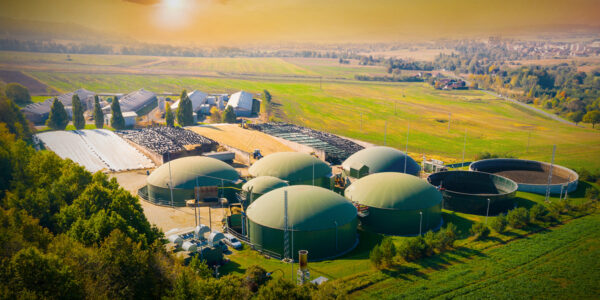
The energy landscape in Europe is undergoing a profound transformation. The European Union is striving to meet ambitious climate goals, but in the meantime the region’s reliance on cleaner fossil fuels such as liquefied natural gas (LNG) is expected to increase significantly. This article explores the complex dynamics at play, focusing on the intersection of the EU’s green agenda, growing demand for LNG, and the geopolitical challenges that shape Europe’s energy security.
The energy debate in Germany has taken on a new urgency as the far-right party Alternative für Deutschland (AfD) surges in the polls, challenging the country’s green energy transition. Known for its strong opposition to the Green Party’s and the government’s climate policies, the AfD has managed to sharpen its political profile, capitalizing on growing public concerns over the economic and social costs of Germany’s ambitious energy goals.
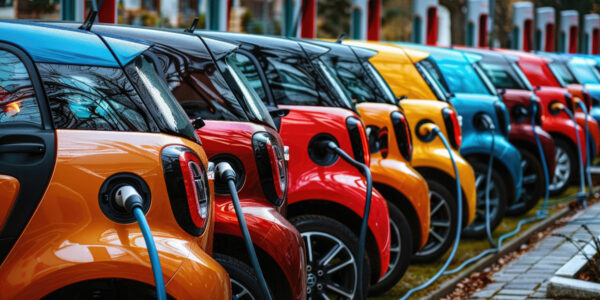
With the acceleration of a project to mine lithium – a key metal for electric mobility – in its Jadar region, the small Balkan country of Serbia has been given a chance to become a key player in the European, and also the global economy. At the same time, rarely has any project caused such a powerful public backlash: news of new protests and comments from experts and politicians are appearing in the world media on an almost daily basis. Will Serbia be able to overcome public hostility and move towards becoming a major lithium powerhouse?

At the beginning of this year, it became known that Ukraine would not renew its contract with Russia for the transit of Russian gas to Europe. This contract, which expires on 31 December 2024, covers the transportation of 225 billion cubic metres of fuel over five years. Most of the Russian gas flowing to Europe was channelled through this pipeline. However, Kyiv has now made it clear that it has no intention of providing Moscow with transit capacity. While Europe was quick to express verbal support for this decision, Russia still anticipates the possibility of an extension to the agreement.
American LNG was a real salvation for Germany after the European Union decided to reduce its purchases of Russian gas to the maximum extent possible after the start of the conflict in Ukraine and to completely abandon it by 2027. Of all European countries, Germany, the main buyer of energy from Russia for many years, has seen the most significant reduction. If earlier Berlin’s dependence on Russian gas reached 55% of Germany’s total energy imports, a year ago the share of this gas in German imports had dropped to 20%. Therefore, American gas, which replaced Russian gas, turned out to be a real salvation for European economies – and especially for the German economy.
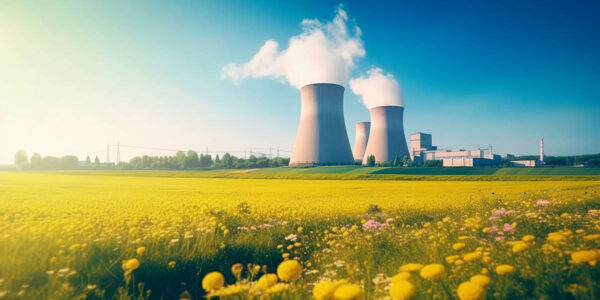
It looks like nuclear energy globally is experiencing a genuine renaissance, particularly in Europe. However, the huge costs and complexity of building new nuclear power stations prevent nuclear energy being a quick fix for all the problems of Western countries. Moreover, without Russia it is simply not possible.
With the start of the war in Ukraine in 2022, the EU began to steadily reduce purchases of energy from Russia, particularly gas, intending to end gas imports from Russia completely by 2027. As at the end of June 2023, Russia’s share of EU gas imports had decreased from 38.5% to 12.9% compared to the same period in 2021.

On February 14th 2024, Russia announced that it was suspending its annual payments to the Arctic Council, the main international cooperation platform for the Arctic states, which includes eight member countries, six permanent participants representing indigenous peoples, and 38 observers.
The move confirmed…

Turbulence in politics and the global economy is aggravating the rough edges of the Green Deal, which as well as being a heavy burden for the industries and energy sectors of individual member states could also become an open route to power for far-right political forces
Few doubt the fact that the EU’s brand colour is green. At the end…
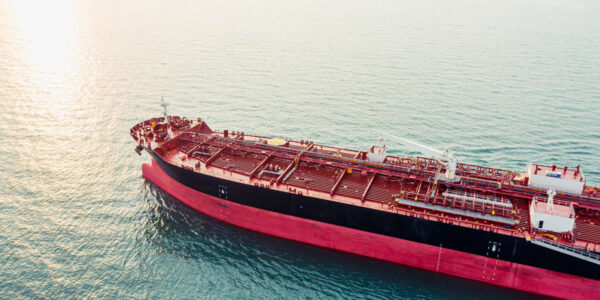
The energy crisis and inflated gas prices in Europe have laid bare an obvious contradiction in the EU’s previous energy policies and their orientation on spot trade. Not long ago, long-term gas contracts – and not only those linked to Russia – were regarded by the Europeans as a form of bondage, which would not only increase the EU’s dependence on individual suppliers, …

'/%3E%3C/svg%3E)
