


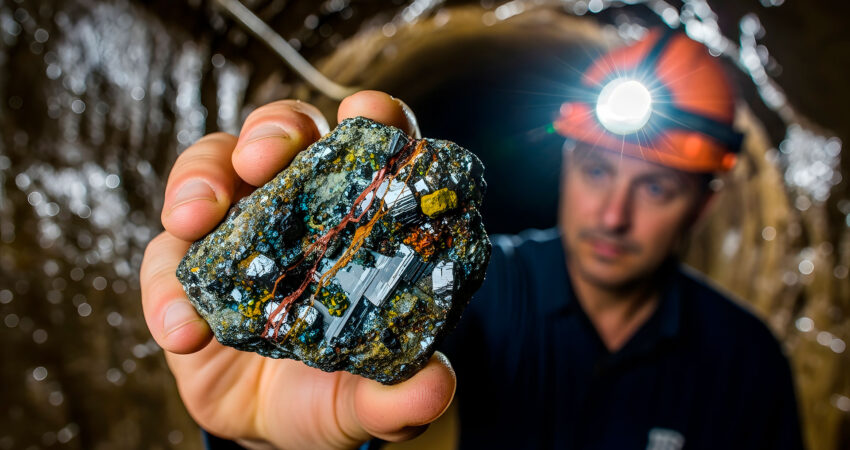
Europe had grown used to living from winter to winter. Once gas storage facilities were filled and January passed, survival was assured. When Europe finally turned the page on Russian gas in 2023–2024, it felt like a victory—an escape from the worst kind of dependence. But the celebration was short-lived. At that very moment, Europe quietly stepped into a new dependency—on critical raw materials essential for electric vehicles, wind farms, and energy storage systems. The challenge: these resources—lithium, nickel, cobalt, rare earth elements—are concentrated in the hands of countries that plan decades ahead, not season by season. If the old model of simply switching suppliers no longer applies, where is Europe’s long-term strategy?
Ten years ago, rare earths were an academic curiosity. Today, they dominate discussions in the green economy. A single wind turbine contains up to 600 kg of rare earth metals. Electric vehicle batteries rely on lithium, nickel, cobalt, and graphite. And demand is skyrocketing faster than governments can respond. According to the International Energy Agency, global demand for lithium is set to triple by 2030, with demand for nickel and cobalt expected to double.
Europe is on the same path. Critical minerals are no longer just a logistical concern—they are now a strategic vulnerability, as highlighted by experts at Bruegel. A gas disruption may cause hardship until spring; a disruption in lithium or graphite could stall the entire energy transition.
China Played the Long Game
This shift in dependency did not happen overnight. China didn’t just capture the market—it built it. Starting in the early 2000s, it focused not on extraction, but on processing—an industry Western firms had largely abandoned due to environmental concerns and low margins. The result? China now controls 60–70% of global rare earth production and up to 90% of processing capacity.
And this dominance is no longer passive. In October 2025, Beijing extended export restrictions on graphite and rare earths, citing “national security.” For the EU, this was a wake-up call: most of its battery-grade graphite is imported from China.
European Commissioner for Internal Market Thierry Breton warned back in 2022: “Lithium and rare earths will soon be more important than oil and gas. Our demand for rare earths alone will increase fivefold by 2030. We must avoid falling into a new dependency.” That warning now reads more like a forecast fulfilled.
Gas Lessons, Mineral Reality
In energy, Europe has long planned around winters—LNG supplies, storage levels, weather forecasts. But critical minerals demand a longer lens. This isn’t about seasonal resilience but the long-term viability of technological progress.
To meet its climate targets, Europe must cut fossil gas consumption. But doing so increases demand for metals, without which electric vehicles and storage systems are impossible. In essence, reducing one dependency has created another—one deeper and more complex.
The Critical Raw Materials Act: From Strategy to Action
The EU’s Critical Raw Materials Act, adopted in 2024, set targets for 2030 to secure the strategic value chain:
- At least 10% of annual consumption to come from EU extraction
- At least 40% from EU-based processing
- At least 25% from recycling
- No more than 65% from a single non-EU country
For a while, these goals seemed more aspirational than actionable. Europe lacked the industrial-scale processing, the skilled workforce, and the necessary permits, which can take years to secure.
But by late 2025, momentum is building. In response to Chinese restrictions, the EU has stepped up efforts to secure raw materials in Brazil, Central Asia, South Africa, and Australia. Still, most agreements remain on paper, awaiting real investment.
The EU is also drafting a plan to reduce its reliance on China for critical minerals. What was once a trade issue is now firmly in the realm of security—just as gas was after 2022.
Copyright: AdobeStock #1838338133
New Partners, New Terms
The old approach of “just finding new suppliers” no longer works. Countries rich in minerals now set the terms.
In Australia, Trade Minister Don Farrell has pledged reliable raw material supplies to the global market—while investing billions in domestic processing and strategic reserves. Australia is open for business, but expects long-term offtake agreements and potential co-financing.
In Canada, October 2025 saw a pivot toward securing supply agreements primarily within the G7, supported by financial instruments. While Europe is included, the US remains Canada’s top priority. This “club model” runs counter to the EU’s preference for open markets.
A rare success came in Namibia, where EU-backed feasibility studies for a joint rare earth processing facility have begun. Promising talks are also underway with Kazakhstan, which has offered access to dozens of critical minerals.
What’s at Stake
We’ve entered the age of mineral geopolitics. China is tightening its grip, imposing export controls. Australia and Chile are shifting toward domestic processing. EU-US negotiations on a critical minerals pact face ongoing friction.
Europe’s window of opportunity is narrow. Unlike gas, which was re-routed in two years, building independent critical mineral supply chains could take a decade or more. Europe needs new processing capacity, strategic reserves, and diversified sources. Yet many current agreements remain mere memoranda.
If Europe fails to act decisively now, the mid-2030s could bring déjà vu: yet another strategic dependence, this time on materials essential for its green and digital future -noticed too late, and far harder to unwind.