

'/%3E%3C/svg%3E)
As Europe moves deeper into the winter of 2025-2026, the continent’s energy system reflects a transformation shaped by cooperation, investment, and strategic foresight. Technically, electricity and gas supplies are broadly secure across the Union. Economically, markets remain sensitive to global conditions but they are now operating within a framework that is more diversified, more connected, and more resilient than at any point in recent history.
For policymakers and system operators, the focus has evolved. Beyond preventing blackouts or heating shortages, the priority is now to steer a modern energy system that balances security, affordability, and climate ambition a task increasingly defined by European-level coordination rather than national isolation.
Electricity: Adequacy Powered by Integration
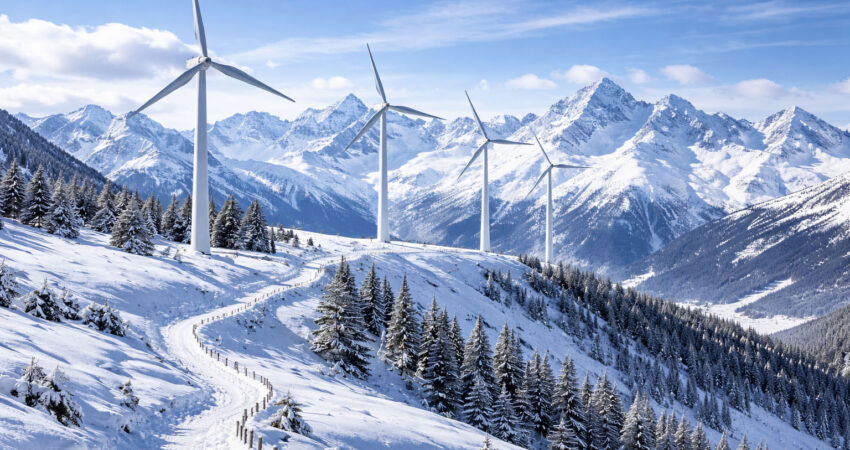
Europe’s transmission system operators (TSOs) anticipate “strong overall system adequacy” for the winter season, signalling that generation capacity is sufficient to meet demand in nearly all credible scenarios. This confidence is rooted in the rapid expansion of wind and solar power, complemented by the continued availability of nuclear, hydropower, and flexible thermal generation.
“From a system perspective, Europe enters this winter with a level of resilience that reflects years of coordinated investment,” said an energy security analyst at a Brussels-based think tank. “The diversity of the energy mix and the depth of cross-border interconnection now form a genuine European safety net.”
Cross-border electricity flows have become a cornerstone of this strength. When wind generation softens in one region or demand rises sharply in another, power can move across borders in real time, smoothing imbalances and lowering the risk of local disruptions. The high-voltage interconnectors built over the past decade are not just engineering projects: they are practical expressions of European solidarity in action.
System operators acknowledge that extreme weather can still test regional margins. Yet Europe’s growing portfolio of flexibility tools including battery storage, pumped hydro, demand response programmes, and fast-ramping generation is expanding the system’s ability to adapt dynamically, even under challenging conditions.
Gas and Heating: Storage as a Pillar of Energy Security
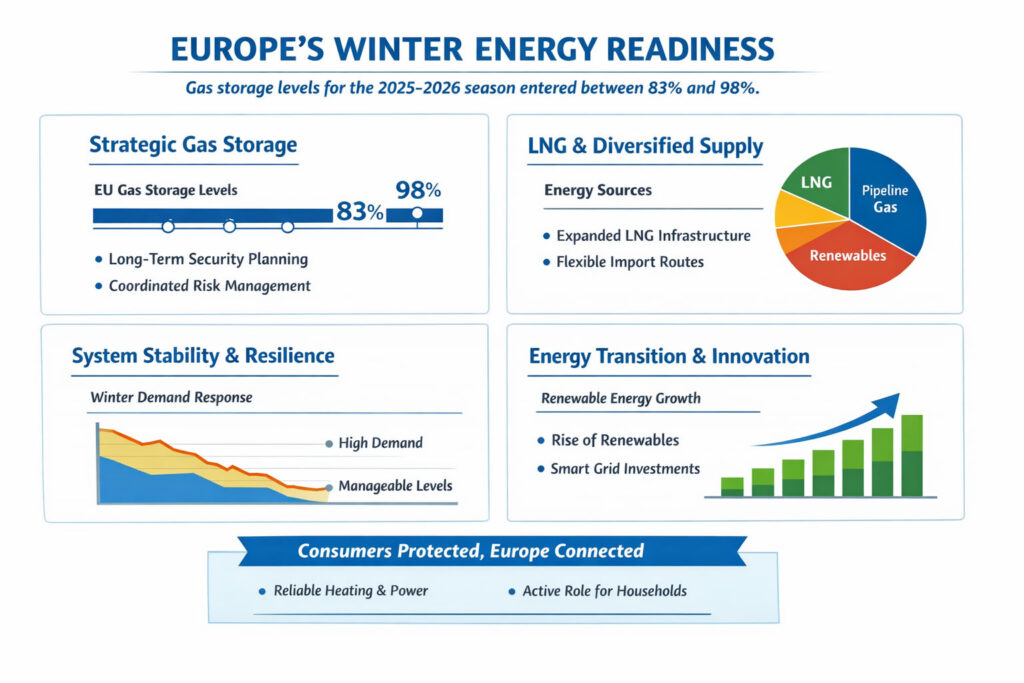
Gas continues to play an important role in Europe’s winter energy balance, especially for heating. The EU entered the 2025–2026 season with storage levels between roughly 83 and 98 percent – a tangible result of common rules, coordinated planning, and collective risk management introduced in recent years.
A consensus among experts from organizations like Argus Media, Montel, and S&P Global was that storage has become a strategic European asset. It reflects a shift from short-term market thinking to long-term security planning, where member states act together to protect consumers and critical services.
Cold spells in early January demonstrated the system’s responsiveness. While storage levels declined with higher demand, they remained within what analysts describe as a healthy and manageable range. The ability to draw on shared reserves and diversified supply routes gives Europe valuable time and flexibility to respond to external shocks.
Europe’s expanded LNG infrastructure also underscores its global role as a major, reliable market. While competition for cargoes remains a feature of global trade, Europe’s network of terminals, storage sites, and pipeline connections provides a level of optionality that few other regions can match.
Regional Strength Through Cooperation
At the continental level, the risk of systemic disruption is widely regarded as low. Diversified energy sources, high storage levels, and EU-wide emergency coordination frameworks form a strong and tested safety net.
For smaller or more remote systems, integration is increasingly the solution. New interconnectors, regional market coupling, and bilateral support agreements are steadily reducing the historical vulnerabilities of peripheral regions, from the Baltic to the Nordic area and island grids.
In today’s Europe, resilience is no longer built in isolation. It is built through connection – physical, regulatory, and political.
The Market Perspective: Stability Through Scale
For consumers and businesses, the defining feature of this winter is not scarcity, but adjustment within a global market. Europe’s large, integrated energy system gives it significant influence and bargaining power, even as prices continue to reflect international developments such as weather patterns, shipping flows, and geopolitical shifts.
“The advantage of Europe’s scale is that it can absorb shocks better than fragmented markets,” one of the European experts shared with Energy Brief. “Volatility still exists, but it is being managed within a more transparent, liquid and predictable framework than in the past.”
At the same time, reforms in retail pricing, network investment, and targeted social support aim to ensure that the benefits of system security are shared broadly across society especially for vulnerable households and small businesses.
A System Shaping the Energy Transition
Europe’s winter outlook highlights more than short-term preparedness; it reflects a long-term transformation. The continued rollout of renewables is steadily reducing dependence on imported fossil fuels, while electrification across transport, heating, and industry is creating new opportunities for innovation and growth.
Gas, once a dominant baseload fuel, is increasingly positioned as a strategic balancing resource, supporting the integration of variable renewables. Meanwhile, investments in digital grids, smart metering, and cross-border infrastructure are laying the foundations for a truly continental energy market.
Experts agree that Europe is not only securing energy for the coming winter but is also building a system designed to lead globally – cleaner, smarter, and more connected.
What It Means for Citizens
For households, the outlook is reassuring. The risk of widespread power cuts or heating disruptions remains low, even in colder-than-average conditions. Europe’s integrated system, shared reserves, and coordinated response mechanisms provide a strong layer of protection.
At the same time, consumers are becoming active participants in the energy transition. Energy efficiency, smart appliances, and flexible tariffs allow households to reduce costs and contribute to system stability, turning millions of end users into part of Europe’s resilience strategy.
Looking Ahead
As winter continues, Europe’s energy system will remain shaped by the interplay of weather, markets, and global developments. Yet the technical and institutional foundations are strong, reflecting a decade of investment in infrastructure, regulation, and cooperation.
The central question for the months ahead is not whether Europe can secure enough energy – it has demonstrated that it can. The challenge is how to ensure that the benefits of this shared strength are delivered affordably, sustainably, and equitably across the continent, reinforcing Europe’s role as a global leader in the clean and connected energy future.